Salisbury Crags
Salisbury Crags — The Edge Above Edinburgh
Stand on the Radical Road beneath Salisbury Crags and you'll understand immediately why this place has been drawing people for centuries.
The Crags are a series of dramatic dolerite cliffs that sweep around the northern flank of Holyrood Park, rising sharply above the city in a wall of dark volcanic rock that looks almost too cinematic to be real. From below, they're imposing — a raw, angular escarpment that drops away to the Radical Road path and the rooftops of Edinburgh beyond. From above, standing at the edge looking out over the city, they're breathtaking.
The geology here is part of the same ancient story as Arthur's Seat. The Crags were formed by a volcanic sill — molten rock that pushed horizontally between layers of older rock around 340 million years ago and then solidified. It was here, on these very cliffs, that the 18th-century geologist James Hutton made observations that would eventually transform our understanding of the age of the Earth. Salisbury Crags didn't just shape Edinburgh's skyline — they helped reshape science.
For photographers, the Crags offer something that's genuinely rare: a wild, dramatic foreground with one of the world's great cityscapes as the backdrop. From the path that runs beneath the cliff face, you can shoot upward and capture the sheer scale of the rock against the sky. From the top of the Crags, the whole of Edinburgh unfolds below — the castle, the Old Town ridge, the New Town grid, the Forth, the hills of Fife on the horizon. There is no better vantage point in the city.
The light moves differently here depending on the time of day. Morning shoots from below the Crags catch the sun hitting the rock face directly, picking out every texture in the dolerite. Evening shoots from the top turn the city below into a warm, golden panorama as the sun drops toward the west. Overcast days strip away the softness and make the cliffs look exactly like what they are — ancient, hard volcanic rock that has outlasted everything built around it.
The Radical Road itself is worth noting. Built in the 1820s to provide employment for workers after the Napoleonic Wars, it runs along the base of the Crags in a long, curving line that leads the eye perfectly through a photograph. In fog or mist it almost disappears into the landscape. In sharp winter light it cuts a clean line between rock and city. It's one of those details that makes Salisbury Crags endlessly photographable — there's always something new to find here.
Views of the Castle
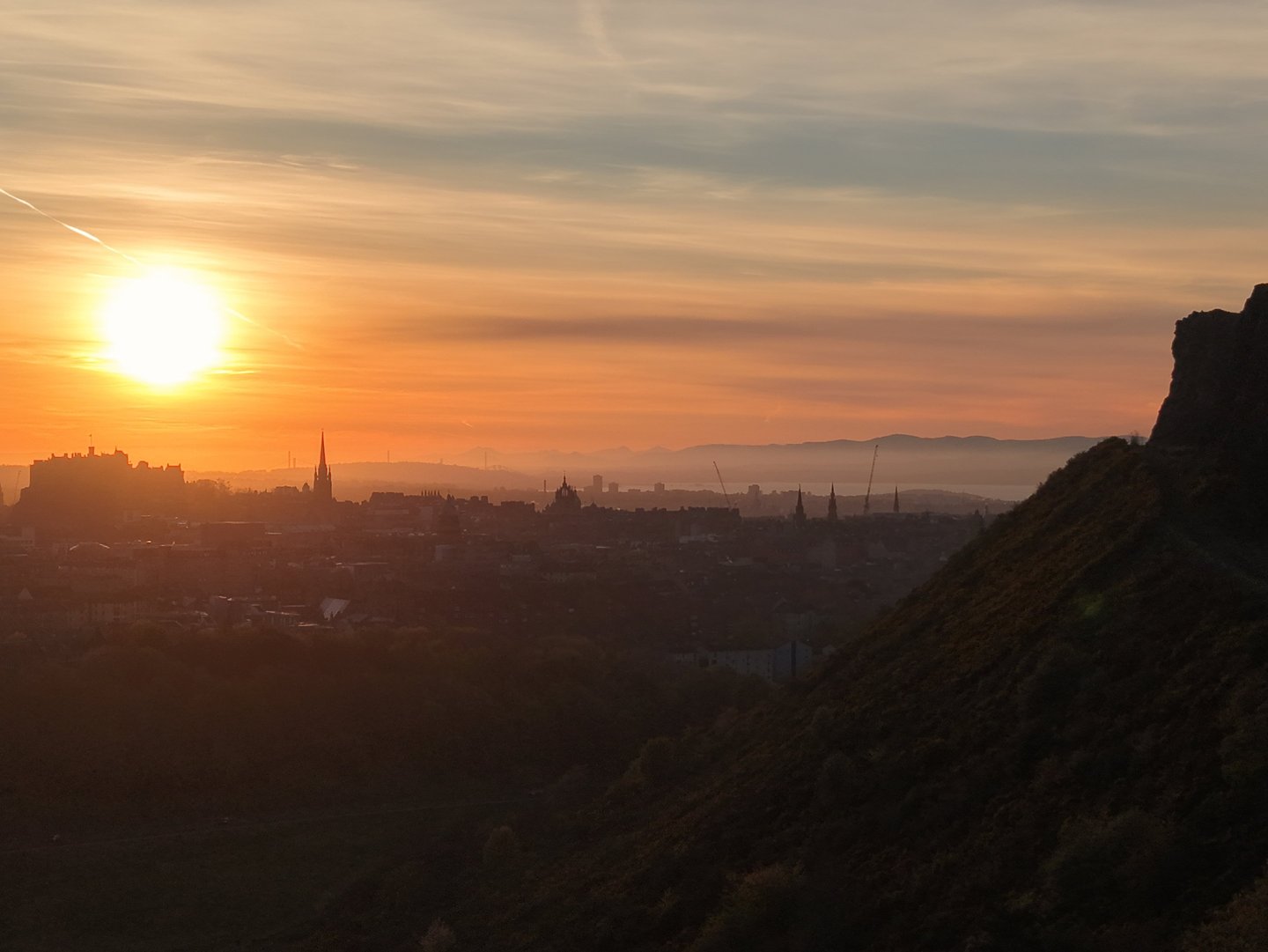
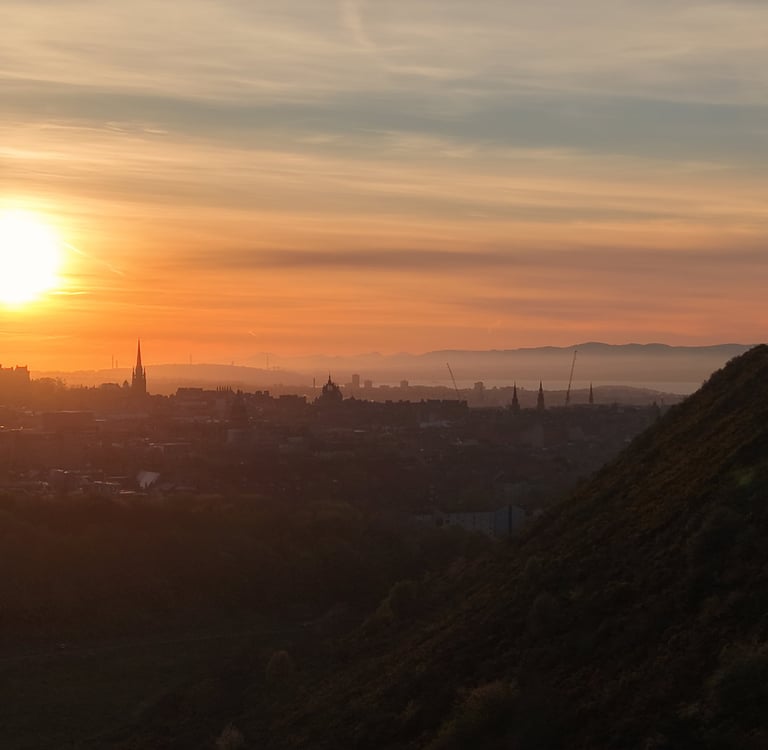
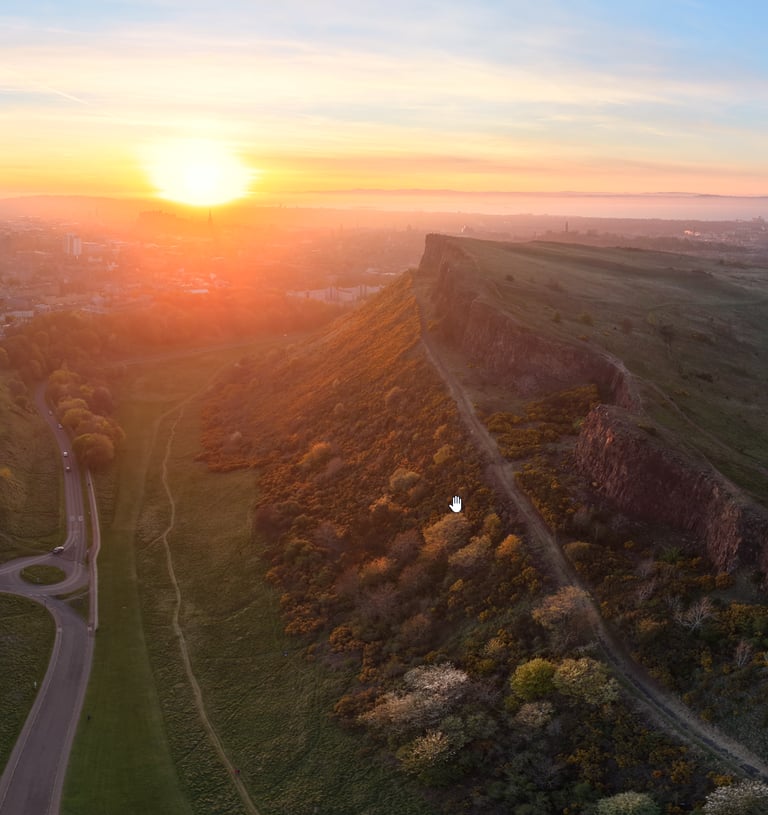
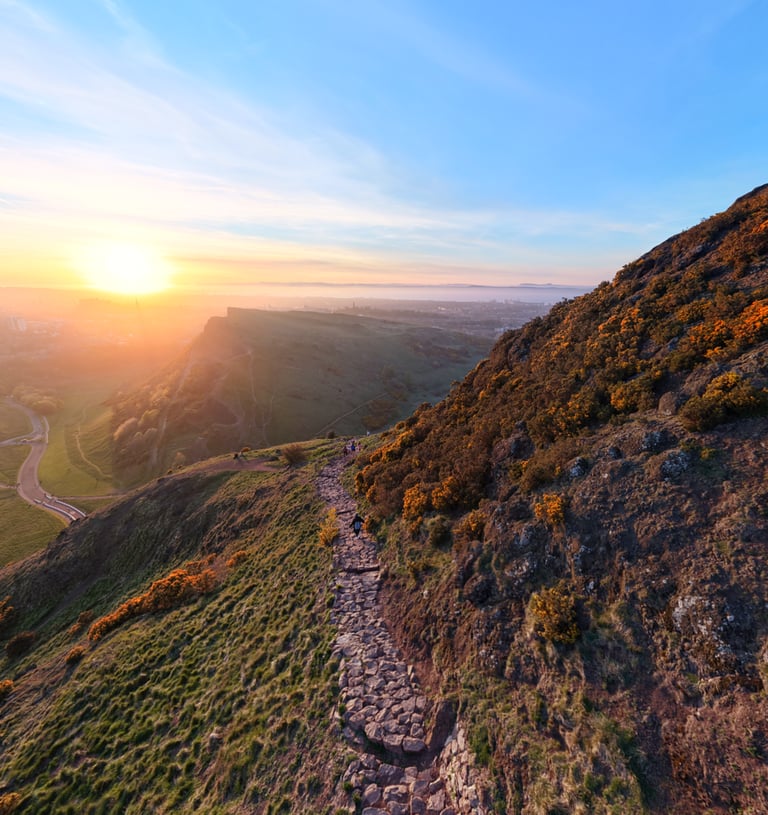
Enjoy the views of Edinburgh Castle at sunset
Radical Road
Walk around the Radical Road
Volcano View
Enjoy the views from atop of Arthurs Seat